

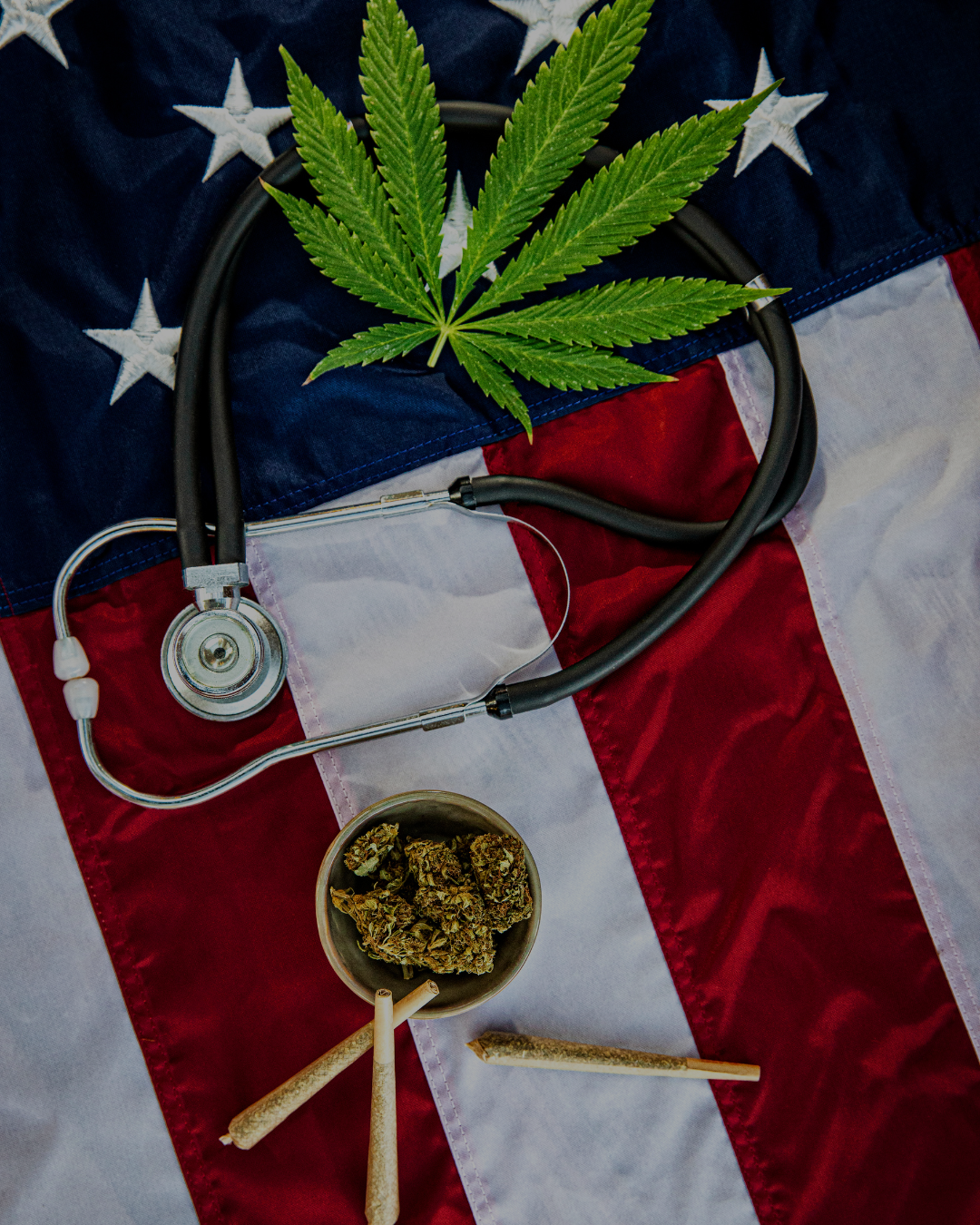
Marijuana Reclassification and the Future of Cannabis: Key Takeaways from Trump’s Executive Order
Today marks a significant shift in federal cannabis policy. President Donald Trump signed an executive order directing federal agencies to complete the marijuana reclassification process, moving cannabis from Schedule I to Schedule III under the Controlled Substances Act. If you’re building a career in this industry, or considering entering it, understanding what this marijuana reclassification changes (and what it doesn’t) is critical. Let’s break down what just happened and what it means.
Understanding the Basics: What Is Marijuana Reclassification?
Since 1970, cannabis has been classified as a Schedule I drug, the same category as heroin, LSD, and ecstasy. This classification meant that according to the federal government, marijuana had “no currently accepted medical use and a high potential for abuse.” Yes, you read that right. Even though 24 states have legalized recreational cannabis and most states allow medical use, the federal government officially viewed it as having zero medical value.
Today’s executive order advances the marijuana reclassification process. Cannabis will be moved to Schedule III, alongside drugs like Tylenol with codeine, ketamine, and testosterone. Schedule III substances are defined as having “moderate to low potential for physical and psychological dependence” and recognized medical uses.
Important clarification: This marijuana reclassification does NOT legalize cannabis nationwide. Cannabis remains illegal under federal law for recreational purposes, but now the government acknowledges its medical value.
When Will Marijuana Reclassification Take Effect?
This is the question everyone is asking. The executive order directs Attorney General Pam Bondi to complete the rulemaking process “in the most expeditious manner in accordance with Federal law,” but it won’t happen overnight.
According to legal experts and the Moritz College of Law Drug Enforcement and Policy Center, the marijuana reclassification process involves several mandatory steps:
Administrative hearings: The DEA had scheduled administrative hearings that were postponed in January 2025 when an administrative law judge delayed proceedings while an appeal is resolved. Trump’s order seeks to expedite past these delays.
Final rule publication: Once hearings conclude, the DEA must publish a final rule in the Federal Register. This typically takes weeks to months after hearings conclude.
Congressional review period: Under the Congressional Review Act, if marijuana reclassification is deemed a “major rule” (which it almost certainly will be), the DEA must submit the rule to Congress for a 60-day review period before it can take effect.
Judicial review: Even after the rule is finalized, interested parties have the right to challenge the marijuana reclassification in federal court, which could further delay implementation.
Timeline estimate: Legal experts interviewed by Foley Hoag estimate the entire process could take several months to potentially a year, even with Trump’s directive to expedite. The fastest comparable example was when Marinol (synthetic THC) was rescheduled in 1999, that process took approximately 57 days from proposed rule to final rule, but marijuana reclassification is far more complex and controversial.
Most industry observers expect marijuana reclassification to be finalized sometime in 2026, though the exact date remains uncertain.
The Tax Relief You’ve Been Waiting For: Goodbye 280E
Here’s where marijuana reclassification gets really interesting for cannabis businesses and workers. For decades, cannabis companies have been crushed by something called Internal Revenue Code Section 280E. This is the single biggest financial burden the industry has faced, and marijuana reclassification eliminates it.
What is 280E?
Section 280E, enacted in 1982 during the Reagan Administration, prevents businesses dealing with Schedule I or II substances from deducting ordinary business expenses on their federal taxes. Think about that: while a coffee shop can deduct rent, utilities, employee salaries, marketing costs, and office supplies, a state-legal cannabis dispensary could not.
Cannabis businesses could only deduct their “Cost of Goods Sold” (COGS), essentially the direct costs of growing and producing the product. Everything else? Not deductible.
The Real-World Impact
The numbers are staggering. According to industry research, cannabis companies have been paying effective tax rates of 40-80%, compared to the standard 21% corporate tax rate other businesses pay. In 2022 alone, state-legal marijuana companies paid over $1.8 billion in excess taxes compared to non-cannabis businesses.
As MJBizDaily reported, this burden particularly hammered retail dispensaries and startups. Some businesses found themselves paying taxes that consumed 70-87% of their actual earnings. Matt Sirois, co-owner of Brotherly Bud dispensary in New Jersey, described the situation: “We can’t deduct ordinary business expenses like rent, utilities, or employee wages. Costs that every other small business takes for granted. This makes it nearly impossible to reinvest in our business, support our staff, and compete in the market.”
Ryan Hunter, Chief Revenue Officer at Spherex, told CBS News that some cannabis businesses currently face effective tax rates as high as 80% under 280E.
What Changes After Marijuana Reclassification?
Once marijuana reclassification to Schedule III is finalized, cannabis businesses will finally be able to:
-
- Deduct employee wages and benefits
- Deduct rent and utilities
- Deduct marketing and advertising costs
- Deduct banking fees, legal costs, and insurance
- Claim standard business tax credits
- Invest more in employee compensation and training
- Expand operations more sustainably
Vince C. Ning, co-CEO of cannabis wholesale platform Nabis, noted that marijuana reclassification will help “accelerate research, reduce stigma, attract new investment, and ease some of the tax burdens that have held the industry back.”
What Marijuana Reclassification Means for Your Career
If you’re working in cannabis or considering entering the field, here’s what marijuana reclassification means for your career prospects:
More Investment = More Jobs
With the 280E burden lifted after marijuana reclassification, cannabis companies will have significantly more capital to reinvest. This means:
-
- Expansion of existing operations
- New store openings and facilities
- Better compensation packages
- More professional development opportunities
- Enhanced employee benefits
The industry has been operating with one hand tied behind its back. Now that financial pressure is easing, expect growth acceleration.
Increased Research Opportunities
The executive order prioritizes medical research. According to Marijuana Moment, the order directs federal agencies to develop research methods and utilize real-world evidence to improve access to hemp-derived CBD products while informing standards of care.
This could open up entirely new career paths, like:
-
- Clinical research positions
- Pharmaceutical development roles
- Medical education and training
- Evidence-based patient care roles
National Institute on Drug Abuse Director Nora Volkow emphasized that marijuana reclassification allows researchers to ask questions rigorously about dosing, safety, and who may benefit most from cannabis-based treatments.
The CBD Revolution
One of the most significant aspects of this executive order involves CBD (cannabidiol). According to the leaked details obtained by Marijuana Moment, the order includes several CBD-specific provisions:
-
- Medicare coverage for certain CBD products prescribed by doctors
- Efforts to update hemp definitions to ensure full-spectrum CBD access
- HHS directive to develop research models for hemp-derived CBD products
CMS Administrator Mehmet Oz announced that certain Medicare beneficiaries will be able to receive CBD at no cost under doctor recommendation, provided products meet quality and safety standards. This could create an entirely new healthcare sector within the cannabis industry.
Banking and Financial Services (Still Pending)
While not included in today’s order, industry sources told NBC News and MJBizDaily that the administration may be considering directives regarding the SAFER Banking Act, which would give cannabis businesses access to traditional banking services. This remains one of the industry’s most pressing needs, as most cannabis businesses still operate largely in cash due to federal banking restrictions.
The Bigger Picture: A $32 Billion Industry Transformed
The U.S. regulated cannabis industry is currently valued at approximately $32 billion annually. MJBizDaily’s analysis suggests that as barriers fall and interstate commerce restrictions eventually ease, we could be looking at a $60 billion annual industry when hemp and marijuana sectors fully integrate.
What Marijuana Reclassification Doesn’t Change
Criminal penalties: Simple possession of marijuana is still a federal crime. As one senior administration official clarified, “Anyone possessing marijuana would be in violation of the CSA and still remain subject to arrest under federal law.”
Recreational legalization: Marijuana reclassification is strictly about medical recognition and research. The executive order explicitly states it “doesn’t legalize marijuana in any way, shape or form.”
State-federal conflict continues: The 24 states with recreational legalization and their licensed businesses still technically operate in violation of federal law, though enforcement practices remain unlikely to change.
No interstate commerce: Cannabis products still cannot cross state lines, as that would constitute federal trafficking. This restriction significantly impacts business operations and costs.
Why Marijuana Reclassification Isn’t Enough: The Case for De-scheduling
Here’s what many people don’t understand: marijuana reclassification is not the same as legalization, and it’s not even close to the reform the cannabis industry actually needs.
While marijuana reclassification to Schedule III provides important tax relief and acknowledges medical value, it keeps cannabis firmly within the Controlled Substances Act framework. This means federal prohibition continues. People can still be arrested for possession. Businesses still can’t ship across state lines. Banking remains complicated. And the fundamental injustice of criminalizing a plant safer than alcohol continues.
The real goal isn’t rescheduling. It’s de-scheduling.
De-scheduling means removing cannabis from the Controlled Substances Act entirely, treating it more like alcohol or tobacco: regulated, taxed, but legal for adult use nationwide. This is what advocates have been fighting for, and it’s what the industry ultimately needs to thrive.
What De-scheduling Would Actually Accomplish
If cannabis were de-scheduled rather than reclassified, there would be:
- No more federal arrests: Possession would no longer be a federal crime, and it could end mass incarceration
- Interstate commerce: Companies could finally operate across state lines
- Banking access: Full access to banking services without workarounds
- Consistent regulations: Federal framework could harmonize conflicting state laws
- True business growth: Companies could scale nationally like any other industry
NORML Deputy Director Paul Armentano made this point clear in response to marijuana reclassification: while it “validates the experiences of tens of millions of Americans,” it “does nothing to end hundreds of thousands of possession arrests each year, nor does it do anything to fix the untenable, ongoing disconnect between federal prohibition and the regulated state markets.”
Senate Minority Leader Chuck Schumer called marijuana reclassification “a step in the right direction” but emphasized that “more work must be done to decriminalize cannabis, ease overly restrictive banking regulations that stall industry progress in states where it is legal, and rectify the harms done by the War on Drugs.”
The Political Reality
Marijuana reclassification happened through executive action because it’s administratively achievable within the current framework. De-scheduling requires Congress to pass legislation, which is far more difficult politically. The executive order takes what the administration can do unilaterally, but it’s not a substitute for comprehensive reform.
Think of it this way: if you’re locked in a room, marijuana reclassification is like getting a bigger room with better furniture. De-scheduling is actually unlocking the door and walking free. Both are improvements, but only one is actual freedom.
Industry Concerns About Marijuana Reclassification
Some industry leaders have expressed concerns about marijuana reclassification to Schedule III. Josh Kesselman, publisher of High Times, warned CBS News that moving cannabis to Schedule III could allow pharmaceutical companies to dominate the market with FDA-approved products while subjecting current dispensaries and growers to enforcement under the Food, Drug, and Cosmetic Act.
“These new federal crimes include selling a prescription drug without a license, misbranding a drug, illegal distribution, and conspiracy,” Kesselman said.
Chris Fontes, Founder and CEO of High Spirits, echoed those concerns, saying many cannabis businesses would be unable to legally operate in a Schedule III framework without FDA approval and licensure.
Industry Reactions: Progress, But Not Victory
The response from industry leaders has been mixed. While many welcome the tax relief, most emphasize that marijuana reclassification is merely a first step.
Boris Jordan, CEO of multi-state operator Curaleaf Holdings, told MJBizDaily that while the industry faces threats from large operators entering the space, “we have to build businesses that will compete with them.” Marijuana reclassification helps level the playing field somewhat.
However, many advocates view marijuana reclassification as the bare minimum. The Cannabis Regulators Association noted that it “doesn’t address the core issues facing state-legal markets: banking access, interstate commerce restrictions, and the ongoing criminalization of millions of Americans.”
What You Should Do Now
If you’re in the cannabis industry or considering entering it:
For Current Cannabis Professionals:
-
- Prepare for growth and expansion at your company once marijuana reclassification takes effect
- Consider up-skilling in compliance, research, or specialized areas
- Stay informed on implementation timelines for tax relief
- Support advocacy efforts for full de-scheduling
For Those Considering Cannabis Careers:
-
- This is a better time to enter the industry than before
- Focus on professional development and certifications, like our online certification course
- Research companies positioned for growth after marijuana reclassification
- Understand the limitations still facing the industry
- Consider how your skills could contribute to further reform efforts
For Businesses:
-
- Work with your tax professionals to prepare for 280E relief once marijuana reclassification is finalized
- Plan strategic investments for when capital becomes available
- Continue advocating for comprehensive reform
- Review employee compensation and benefits structures
The Path Forward
Today’s executive order on marijuana reclassification represents progress, but not victory. It’s a vindication of the patients who found relief, the medical professionals who recommended treatment, and the businesses that operated in legal gray zones to serve their communities. Marijuana reclassification provides real, meaningful financial relief to struggling cannabis businesses.
But let’s be clear: cannabis is still federally illegal. People are still being arrested. Interstate commerce is still impossible. Banking is still complicated. And the fundamental injustice of prohibition continues.
Full de-scheduling remains the goal. That means federal legalization, interstate commerce, complete banking access, and criminal justice reform. It means treating cannabis like the relatively benign substance it is, rather than maintaining the fiction that it belongs in the same legal category as prescription painkillers.
The $32 billion industry we see today could easily double or triple as remaining barriers fall. For those of us building careers in cannabis, the opportunity is real. But so is the unfinished work.
We’re not just working in an industry. We’re building one from the ground up while simultaneously fighting to change the laws that govern it. Today’s announcement on marijuana reclassification confirms we’re making progress. But the fight for full legalization, for justice, and for a truly free cannabis industry continues.
Sources:
Cannabis Career Academy is committed to providing accurate, timely information to help you navigate your career in this rapidly evolving industry. Stay tuned for updates as the rescheduling process unfolds.